|

|
"Legends and Lairs by Kevin Wilson
Fantasy Flight Games, 2003; ISBN:1589940962 |
| "Illusion spells deceive the senses or minds of others. They cause people to see things that are not there, not see things that are there, hear phantom noises, or remember things that never happened. Illusions come in five types: figments, glamers, patterns, phantasms, and shadows." -- p. 2. |
|
"Legends and Lairs by Wil Upchurch
Fantasy Flight Games, 2002; ISBN:1589940253 |
|
|
|
"Magical Libraries "At first glance, magical libraries might not seem very different from their mundane counterparts, but upon delving more deeply into the stacks one can begin to see the difference. For example, the Compendium Herbonica might include details on plants for use in arcane rituals; history books might include details on cultures that sank beneath the sea four millennia ago. The binding on some of the books is faintly disturbing, and the words on the pages seem to run away from the eyes. Some books vanish as soon as they are put down; others seem to always been on the shelf a patron is looking at, no matter where he wanders. ... "Actual spellbooks will almost never be found openly in a library, even in a magical academy. Access to a spellbook containing a specific spell must be negotiated. Libraries often charge high fees ... for such access unless the wizard is a guild member or frequent library patron. Most libraries will also accept a spell trade, wherein the wizard ofers to scribe a spell out of his own spellbook for the library's collection. This spell must be one the library does not already offer.... The wizard transcribing the spell will be closely watched and monitored at all times and his writing inspected to make sure he is copying the correct spell.
"Using Libraries for Magical Research
"Spellbooks
"Spell Components and Arcane Foci
"Taint and Tune "So, what allows a sorcerer to call forth magic with no preparation and no forethought? The most common claim is that it is a taint in the blood, that the sorcerer's ancestors consorted with dragons, or demons, or fey, and that this long-ago coupling still stains the sorcerer's soul generations later. Others claim that this is the conceit of the caster, that the origin of sorcery is more mundane. These people can simply cast spells intuitively, they say. Dragonblood is just an old wives' tale. "Another idea to consider is that sorcerers, bards, and wizards all cast the exact same spells.... This has an interesting implication, that magic is an objective, universal force, and that to perform a given effect, there are certain words and gestures that must be performed." -- p. 64. "Sorcerers and Society: Some may ponder why sorcerers are generally perceived as different from wizards. ...The reason for the distinction is that the sorcerer's power is seen as unnatural or derived from inexplicable sources. "Magic itself is seen by many to be the harnessed power of demons or devils; in all but the most magic-rich civilizations, the general population finds it disturbing and dangerous by virtue of its difficulty and rarity. Nothing stirs the fears such as that which one does not understand. Combined with the incredible destructive capability of magic, its wielders often find themselves outcast or pushed to the fringe. "This is even more the case for sorcerers. Wizards at least attempt to interact with society, forming guilds, schools, and other organizations much like a merchant or artisan may do. Their powers come from something demonstrable: the meticulous gestures, incantations, and material components that mark the casting of a wizard's spell. Sorcerers, on the other hand, manifest their powers naturally. While they may still use the trappings of wizardry, they do so without understanding or care. They flaunt the casual nature with which they cast spells, and their inability to understand the patterns of each spell they cast engenders distrust from the mundane and wizard alike." -- p. 66.
"Ceremonies and Rituals "Divine ceremonies are used to achieve lofty goals like curing a disease or sanctifying a patch of ground. Clerics, druids, paladins, and rangers all view ceremonies as an important part of the spellcasting process. A ceremony allows a divine character to communicate with and give thanks to her source of power. Clerics and druids often perform rituals between adventures while the wizard studies her spellbook and the fighter sharpens his blades." -- p. 73. "Wards: A ward is a location-based enchantment that, when used in conjunction with a hand-held ward token, may be used to cast pre-determined spells much like a staff. An activ ward might repel evil creatures or it might allow a token bearer to shrug off the effects of a fireball. While many common wards have been streamlined into everyday spells such as arcane lock and glyph of warding, othes require extensive preparation and expensive components. "Wards are activated and controlled via ward tokens, small magical devices that are crafted at the time of a ward's creation. By holding a token forth, its bearer may discharge the ward's spells. Ward spells may be used by more than one person at a time, as long as each is holding a token. ... "Physical Description: Wards may be visible or invisible at the weaver's pleasure. Visible wards appear as complex and colorful runes and icons painted on a wall, floor, or other feature of the target location. Ward tokens may be fashioned from stone, wood, metal, or whatever material appeals to the caster. Sword pommels are popular choices for guards protecting a warded gate. Tokens are covered in runes that bind them to their wards, but they do not reveal a particular ward's capabilities." -- pp. 84-85. |
d20 System (Green Ronin Publishing)
|
|
"ARCANA:
by Kevin Brennan and
Green Ronin Publishing, 2001; ISBN:0970104863 |
|
"...this book focusses on... magical societies. Each society employs
magic to achieve its ends, but not all of them do so in traditional
ways. Magic doesn't have to be restricted to bearded wizards in
secluded castles poring over hoary tomes. Magic can just
as easily be diabolical martial artists wielding weapons forged
from the very essences of evil outsiders or dragonspawn Mafiosi
dealing in illicit drugs and artifacts." -- p. 2.
"Odd's Theory of Magic "There are exceptions to this pattern. Some spells call on planar energies from other sources. For example, summoning spells typically link to the astral plane. Other spells may contact the elemental planes, the plane of shadow, and so forth. However, the energy to power these spells is still drawn from the ethereal and a wave is still created there. "Outsiders [e.g. demons] do not actually travel to the Prime. Rather, the spell creates a body from ether for the soul of the outsider to inhabit. This is why outsiders slain while summoned to the Prime do not die permanently but are banished. They act of destroying the created body creates a disruptive resonance that prevents the creature from returning to another created body for a period of time (typically a century). "This theory of waves is critical to understanding the nature of countermagic and antimagic. Countermagic works by overlaying another, exactly opposite, wave over the wave created by the original spell. The two waves cancel each other out, leaving nothing behind. This is why counterspells must be identical to the spell they are countering. Dispel magic works by adapting itself to exactly counter the wave of the other spell -- however, the wizard casting the spell must be able to determine the exact nature of the spell being countered or the spell will fail. "Antimagic, on the other hand, generates something akin to 'white noise,' disrupting the functioning of all spells within its area of effect. The wave pattern of the spell is suppressed but not damaged. The body created for outsiders (who have been summoned) has its pattern suppressed, but the standing wave will begin to function again as soon as the antimagic disruption passes by. "Planes other than the Prime may have no direct contact with the Ethereal, but magic continues to work there. This is because other planes are in a sense less 'real' than the Prime (that is, after all, why it is the Prime). These alternate planes represent incarnations of very specific aspects of reality, such as the elements, or particular moral and ethical structures. They exist as building blocks from which the reality of the Prime is constructed. In other words, they are halfway between the raw, unformed potentiality of the Ethereal and the manifest form that is the Prime, and the 'matter' of these planes is subject to direct magical manipulation." -- p. 49. |
|
"The Shaman's Handbook" by Steve Kenson
Green Ronin Publishing, 2002; ISBN:0971438013 |
|
|
|
"Shamans believe that the world is alive and filled with spirits they can
contact and bargain with for favors. These spirits vary greatly in power,
from the spirit of a single stone or blade of grass to the great spirits
of the earth, the sun, the moon, the sky, the seasons and other
powerful forces in the world. There are also the spirits of the
shaman's ancestors." -- p. 5.
"Shamans rely heavily on their magical powers and their ability to call on aid from the Spirit World. ... shamans do not have to prepare their spells as other divine spellcasters do." -- p. 35. "Generally speaking, magic items created by shamans tend to be simple in their construction, made with natural materials available in the wilderness such as herbs, wood, bone, leather, stones, crystals, and so forth. Occasionally shamans make or enchant metal items, usually jewelry and weapons, but such things tend to be rare among them.
"Fetishes "Physical Description: Fetishes vary greatly in form, depending on the shaman who made them. Some common fetishes included beaded necklaces or bracelets, collections of feathers, bones, or carved sticks, often tied with a leather thong, animal skulls, bones, or other parts, small bags filled with herbs, crystals, or stones (often painted or carved), and so forth. A fetish's form may be related to the material component(s) of the spell it stores. ... "Charged FetishesMore experienced shamans can create fetishes that are not used up in one casting. These charged fetishes can not only cast a spell multiple times, they can cast it more easily as well. "Physical Description: A charged fetish appears the same as an ordinary fetish but it has charges, much like a wand. In fact, wands can be seen as a specific form of charged fetish. Like normal fetishes, a charged fetish must be held in the hand in order to activate it. ...
"Charms "Physical Description: Charms come in a variety of forms, including pieces of paper or bark inscribed with mystic symbols or runes, small stones, pieces of jewelry, feathers, rabbit's feet, incense, potions, oils, and so forth. Charms are usually small enough to hold in a pouch or the palm of the hand." -- pp. 46-47.
"Mystic Tattoos "The key drawback of a mystic tattoo is that it places a magical 'charge' in the part of the body the tattoo covers. .... A part of the body covered with a mystic tattoo cannot also wear a functional magical item. ... The only exception to this limitation is magical armor, which can be worn and used normally. Magic items that are not worn, such as potions, scroll[s], wands, magic weapons, and so forth, also function normally, even if the character has a tattoo on the arm holding the item.
"Types of Mystic Tattoos "Mystic Mark: The first type is a temporary mystic tattoo, also known as a mystic mark or mystic scar. It recreates the effect of a single spell that affects the wearer of the mark.... Once it is activated, the mystic mark fades from the skin and disappears.... "Permanent Tattoos: A permanent mystic tattoo.... can grant any of the effects of a permanent magic item." -- p. 47-49. |
|
|
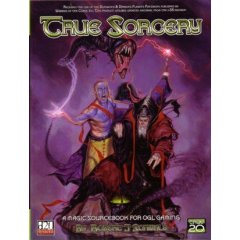
"True Sorcery: by Robert J. Schwalb
Green Ronin Publishing, 2006; ISBN:1932442715 |
|
"In True Sorcery, all magic is the same. Whether you are a
priest, a warlock, a magician, a shaman, or any other user of magic,
the mechanics are identical. Magic is the miraculous, a departure
from the ordinary, the ability to bring about a new thing, a new
phenomenon, an effect that lies outside what is ordinarily
possible. Through force of will, spellcasters change the
essential nature of the world, altering the fabric of reality to
suit their needs. Whether calling forth a demon from the Abyss
or evoking a lightning [bolt] from her fingertips, the spellcaster
restructures the laws of reality to achieve a desired end. Sure,
a priest invokes the blessing of his god, whiel a wizard recalls
[a] complex magical formula, but the process and the energy
harnessed is the same regardless of the user. ...
"In True Sorcery, Spellcraft is an extension of a spellcaster's ability to make use of magical energy and so it is an expression of force of will and strength of personality. Hence, Charisma is its key ability...." -- pp. 4-5. "When you create a magic item, you cast the spell effect into the item and use spell energy to embed the effect. The type and potency of the magic item depends on how much spell energy and personal energy you sacrifice. Most magic items use spell energy as fuel to function. An adventurer who finds a dusty scroll in an ancient vault and learns that it holds a powerful spell effect can't make use of it unless she has the appropriate energy required to cast the spell effect. Other magic items may be specially crafted so anyone can use them, even those who have no magical ability whatsoever, relying instead on speaking a command word or even simply wearing the object. "Crafting a magic item requires the very best materials; the vessel that is to holdthe spell effect must be at least masterwork quality.... In addition, all magic items have a base price, half of which must be spent on the raw materials, such as fetishes, herbs, inks, and other materials required to hold the spell effect. Finally, magic items require the expenditure of XP to bind the spell and in some cases, even a permanent expenditure of spell energy to hold the most powerful spell effects. (In a campaign using true names, you can bind your true name or the true name of an enemy spellcaster, into a magic item...." -- p. 96.
"True Names Identifying Their True Name: Using a spellcaster's true name against her is a complicated process. The first step is to identify the target's true name. Such a process is often difficult, as most spellcasters work to hide their true identities, often moving far from the place of their birth when they discover their magical abilities, consistently using only false names or nicknames, meticulously eradicating their true names from any text, and silencing or killing those who know them. Researching true names is difficult, involving luck in finding the information, and then being able to decipher the text (as authors often hide this information with ciphers). -- p. 106. |
d20 System (Mystic Eye Games)
|
"Blight Magic"
by Herring, Carter,
Mystic Eye Games, 2002; ISBN:0971923809 |
|
|
|
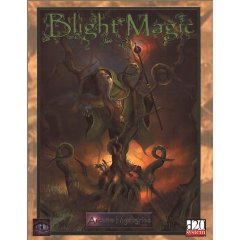
"'All people take from the land, loggers chop trees down, farmers take in the crop, is this so different? Now i know the answer, and it is a resounding yes. This magic rapes the land, takes its very life and soul to feed you, and for what? A temporary gain at best. Worse yet, the price is oh so high. This magic is seductive in its power but oh so corrupting.' "...this form of magic can boost the arcane or divine might of a practitioner to a degree they could have never reached on their own. Quick power comes at a high price though, and the corrupting influences of Blight Magic cannot be denied. Be you a power hungry sorcerer, a wizard with a thirst for knowledge at any price, a fallen druid, a terrible priest, you will learn that the very life of the land around you holds a wealth of raw power, and in these pages you will find the way to tap such forces as no other can." -- pp. 2-3. |
d20 System ( Mongoose Publishing)

|
|
"ENCYLOPAEDIA ARCANE by Sam Witt
Mongoose Publishing, 2002; ISBN:1903980216 |
| "Battle magic is about pushing magic to its absolute destructive limits, turning each arcane phrase into a death sentence and every claw-fingered gesture into a deadly magical assault. Make no mistake -- battle magic is about mayhem and death, ensuring your opponents." -- back cover. |
|
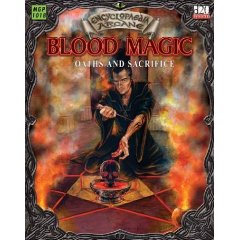
"ENCYCLOPAEDIA ARCANE by Ian Sturrock
Mongoose Publishing, 2003; ISBN:1904577210 |
|
|
| "Illusion spells deceive the senses or minds of others. They cause people to see things that are not there, not see things that are there, hear phantom noises, or remember things that never happened. Illusions come in five types: figments, glamers, patterns, phantasms, and shadows." -- p. 2. |
|
|
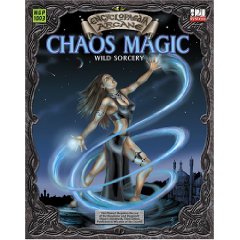
"ENCYCLOPAEDIA ARCANE by Sam Witt
Mongoose Publishing, 2001; ISBN:1903980100 |
| "Illusion spells deceive the senses or minds of others. They cause people to see things that are not there, not see things that are there, hear phantom noises, or remember things that never happened. Illusions come in five types: figments, glamers, patterns, phantasms, and shadows." -- p. 2. |
|
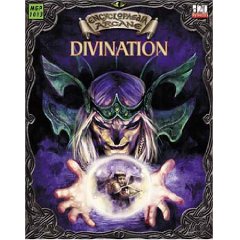
"ENCYCLOPAEDIA ARCANE by August Hahn
Mongoose Publishing, 2003; ISBN:1903980992 |
|
|
| "Illusion spells deceive the senses or minds of others. They cause people to see things that are not there, not see things that are there, hear phantom noises, or remember things that never happened. Illusions come in five types: figments, glamers, patterns, phantasms, and shadows." -- p. 2. |

|
|
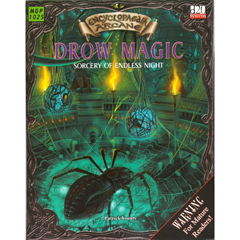
"ENCYCLOPAEDIA ARCANE by Patrick Younts
Mongoose Publishing, ISBN:190485401X |
|
|
| "Illusion spells deceive the senses or minds of others. They cause people to see things that are not there, not see things that are there, hear phantom noises, or remember things that never happened. Illusions come in five types: figments, glamers, patterns, phantasms, and shadows." -- p. 2. |